From Lumber to Industry
|
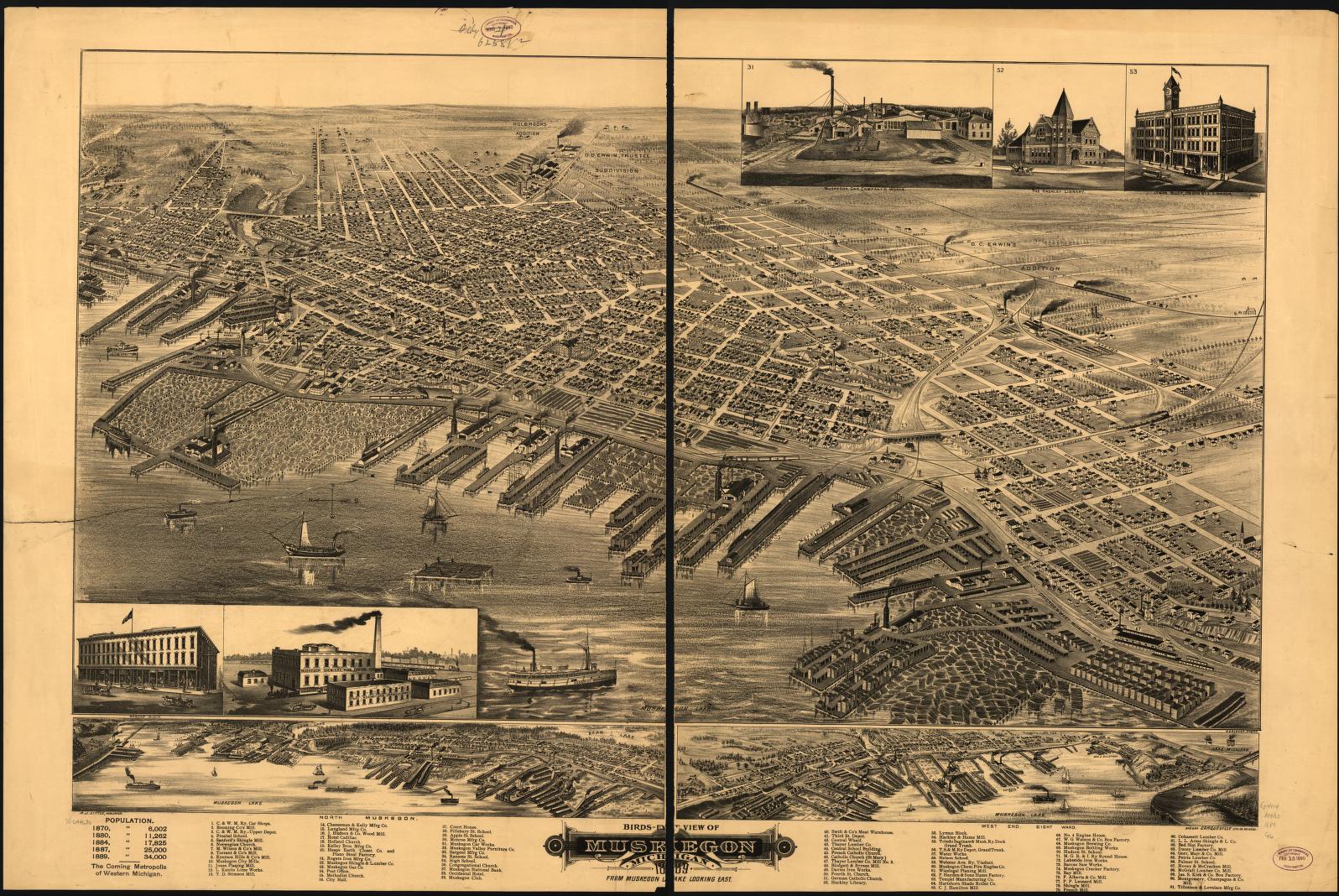
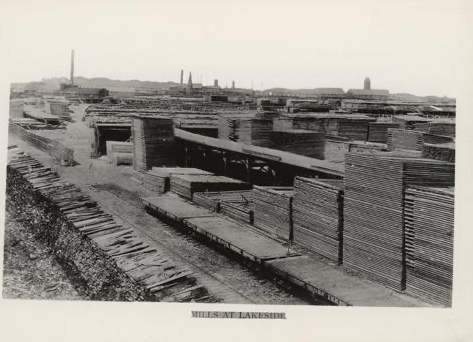
From Lumber to Industry By the time Muskegon County was organized out of Ottawa County, the area had already become a major Lake Michigan port for the export of lumber. The Muskegon River, Michigan’s second longest, served as the conduit for millions of white pine logs cut in the forests along its path. Sent downstream, they would eventually end up in 4,100-acre Muskegon Lake to be drawn into the sawmills that lined the lakeshore. Muskegon city, incorporated in 1869, would become one of Michigan’s principal centers for the initial processing of lumber along with Bay City and Saginaw to the east on Lake Huron. Multiple railroads brought supplies and passengers, hauled freight, and crisscrossed the city. Along the waterfront log ponds next to sawmills, planning mills, wharfs for the load of steam and sailing ships bound for Chicago changed the lakeshore. This activity ballooned the city’s population from 6,000 in 1870 to over 20,000 in 1900. Even as lumber production peaked from 1887 to 1894 business and community leaders realized that the reliance on a vanishing resource spelled trouble for the future. They sought to have the city develop industries to produce goods that helped with the United States’ rapid industrial growth. |