Migration to Muskegon - 1930s to 1960s

Upon arrival in Muskegon, however, African-Americans encountered a circumstance that while better in some respects than the South, it offered a similarly difficult set of problems. Few migrants anticipated a wholly welcoming community and worked to build a community of their own in the area.

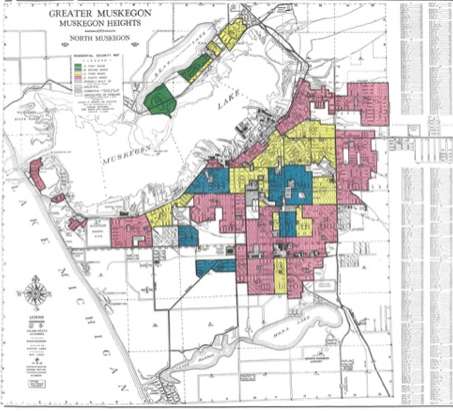
The Home Owners’ Loan Corporation survey map from 1936 demonstrates both the limited supply of housing and the attitudes Black residents faced in the city. Located near industrial areas and in segregated areas featuring the older and often less maintained housing at a high cost, the growth in population meant higher rents regardless of quality.

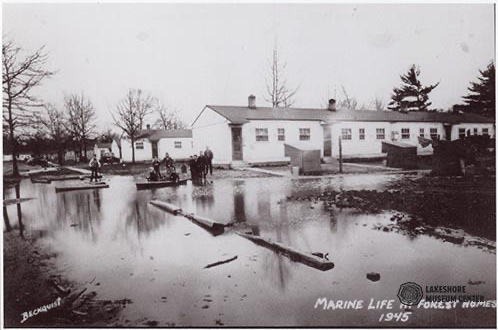
World War II brought the construction of public housing such as Ryerson Heights, Forest Homes, and Ruddiman Terrace in Muskegon, and Fairview Homes in Muskegon Heights which helped but remained largely segregated. Community activists would press both cities’ leadership, realtors, and landlords to accept fair housing practices during the 1960s. Challenging segregation in nearby suburbs has continued since that time.

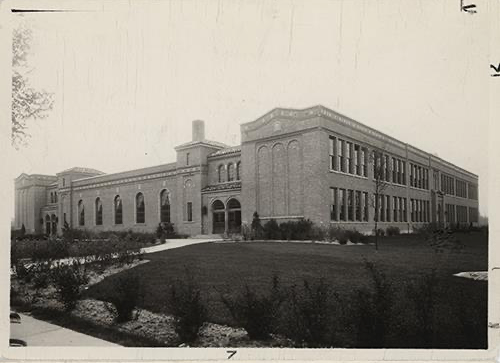
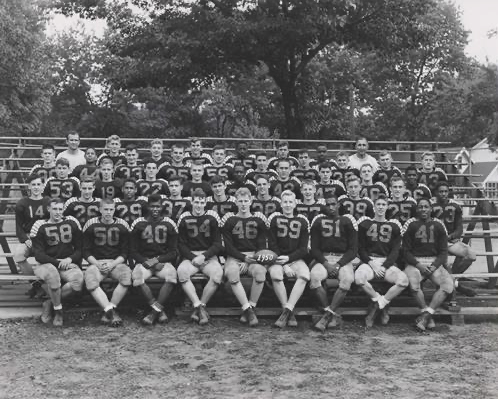
Segregation persisted in public schools, with parents challenging placement in schools such as Froebel in Jackson Hills and for access to a more rigorous curriculum. Similarly, in the Muskegon Heights Schools integration came with challenges that reflected the same issues at work and in housing. Despite often limited access to recreation, team sports offered a way to join in community events.

Challenging exclusion within Muskegon demanded continual effort and resilience in the face of resistance, and at times open hostility. Leaders such as physician Dr. James Jackson and realtor Ciggzree Morris among many others worked to press for rights and provided paths for community members to gain access to new opportunities.

African-Americans also opened businesses along East Sherman Boulevard in Muskegon Heights that provided groceries, produce, entertainment, and automobile service. Along with these came professionals including physicians, dentist, lawyers, and educators. The entrepreneurial and professional class has continued to grow even as the region’s economy has faced challenges and changed significantly since the 1970s.

Muskegon as a reflection of the United States

Muskegon city, county, and its surrounding communities have faced an array of challenges since its industrial peak in the 1960s. Economic change, dislocation, and retrenchment have imposed a host of issues for all communities to confront.

Equality, opportunity, and justice remain serious issues to be confronted. Muskegon reflects nearly all of the issues that the United States in the 21st century must also contend with.

This exhibit is only a starting point to help situate us in a broader set of stories that help us understand a community’s efforts to address issues of race and class. Muskegon is both a home and a city along the shores of Lake Michigan, and a lens through which we can view our nation as a whole.

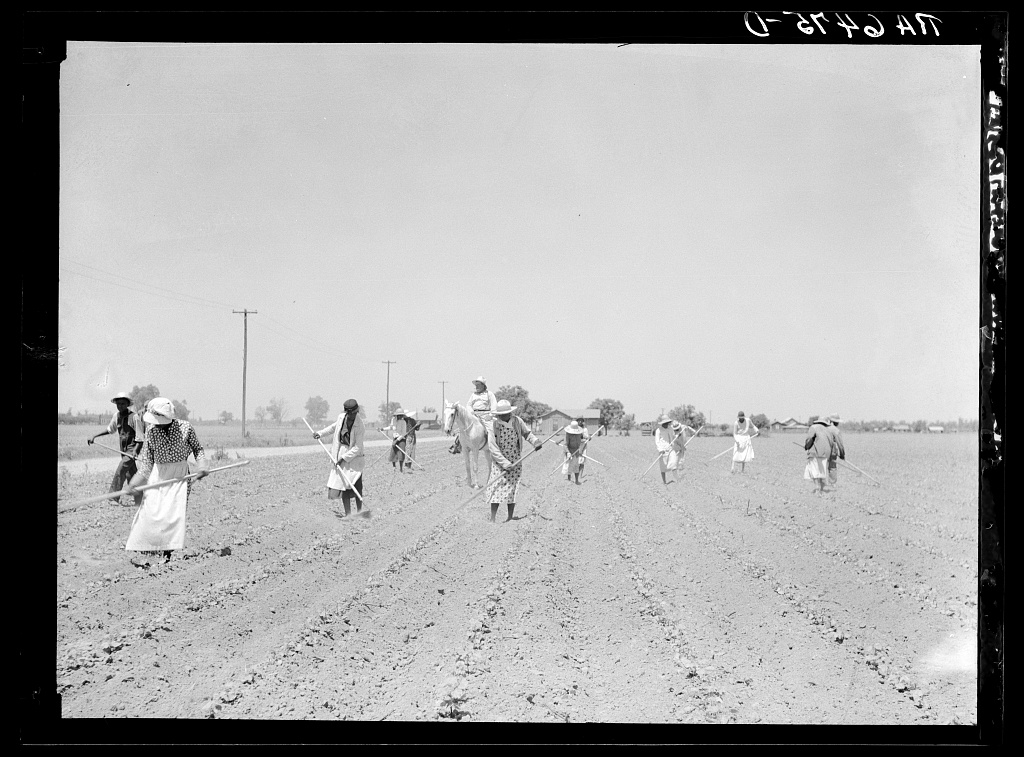
Though mechanization had started, most cotton cultivation in the South consisted of large-scale gang labor under the watchful eye of an overseer. The Great Depression’s crushing economic crisis made life as a sharecropper or tenant farmer even more difficult. Mydans, Carl. “Cotton Chopping on Mississippi Delta Land near Clarksdale, Mississippi.” Still image. 1936. Mississippi--Coahoma County--Clarksdale. https://www.loc.gov/pictures/resource/fsa.8b28825.
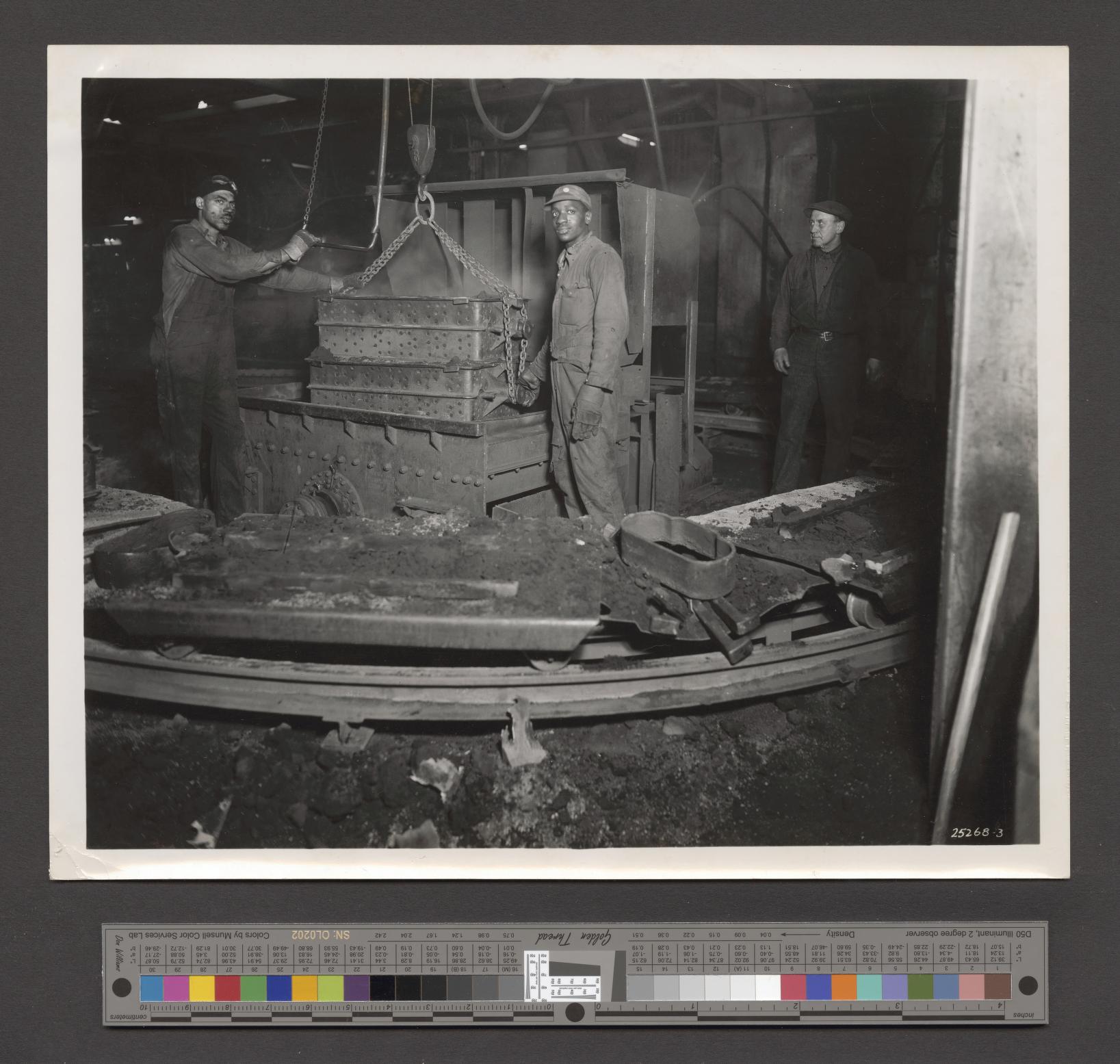
Work in Muskegon’s foundries offered both opportunity for industrial work but within a difficult environment. Two men working at the Campbell, Wyant, & Cannon foundry, Muskegon, Michigan. William L. Clements Library Image Bank. “[Campbell, Wyatt and Cannon Foundry].” Accessed September 25, 2025. https://quod.lib.umich.edu/cgi/i/image/image-idx?id=S-WCL1IC-X-2088%5DWCL002179.
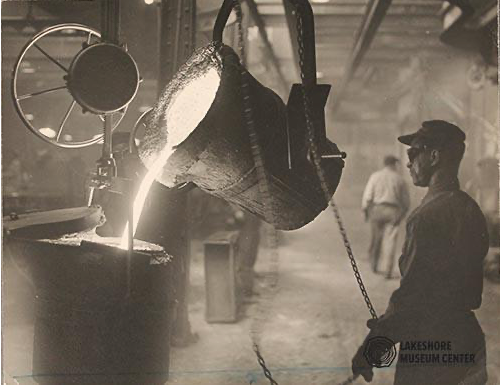
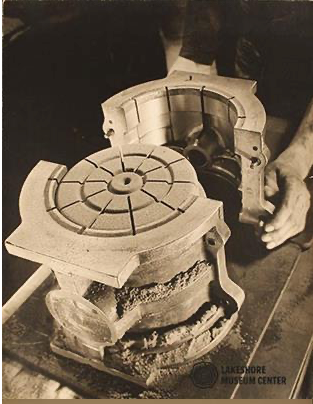
Foundries work with a variety of molten metals poured into forms filled with sand. This work is hot, dirty, and at times dangerous. Lakeshore Museum (Final). “Foundry.” Accessed September 21, 2025. https://5091.sydneyplus.com/final/Portal/Default.aspx?component=AAAS&record=50cd63ee-2894-46de-b6de-61d200ebd26a.
The huge amount of quality sand in the Muskegon area meant that the requirement for sand for molds mean foundries suited the area well. “Foundry Mold.” Accessed September 25, 2025. https://5091.sydneyplus.com/final/Portal/Default.aspx?component=AAAS&record=fa90bc05-e4bb-4679-960d-5f09c06f47a6.
Created by the federal government’s initial home loan plan in the Great Depression, the HOLC map reflects both housing segregation and attitudes towards residents. A further exploration of this can be found in the link: https://dsl.richmond.edu/panorama/redlining/map/MI/Muskegon/area_descriptions/C5#loc=12/43.2204/-86.26 “Mapping Inequality - Muskegon Michigan.” Accessed September 25, 2025. https://dsl.richmond.edu/panorama/redlining/map/MI/Muskegon/area_descriptions/C5#loc=12/43.2204/-86.26
During World War II four large housing projects were built as an effort to address the chronic housing shortage. In Muskegon and Muskegon Heights. Quickly constructed, with poor quality, and in marginal sites, the developments also continued the area’s pattern of segregation. “Forest Homes.” Accessed September 21, 2025. https://5091.sydneyplus.com/final/Portal/Default.aspx?component=AAAS&record=53e70f3d-c0f5-4580-8331-5e83c536fa06.
Located in the Jackson Hills neighborhood, Froebel School was a center for parent activism to both improve course offerings and curriculum and to keep the school in the predominantly Black community. Lakeshore Museum (Final). “Froebel School.” Accessed September 25, 2025. https://5091.sydneyplus.com/final/Portal/Default.aspx?component=AAAS&record=b1fa5d77-1561-483e-9eae-2815f2cbe032.
Sports offered an avenue for recreation and participation in larger community social events. This image of the 1950 Muskegon Heights High School football team reflects the challenges of integration in a city that was by that time already a quarter Black. Lakeshore Museum (Final). “Muskegon Heights 1950 Football Team.” Accessed September 25, 2025. https://5091.sydneyplus.com/final/Portal/Default.aspx?component=AAAS&record=e2d7e2a6-61a2-4df1-99d2-67798ba892fb.
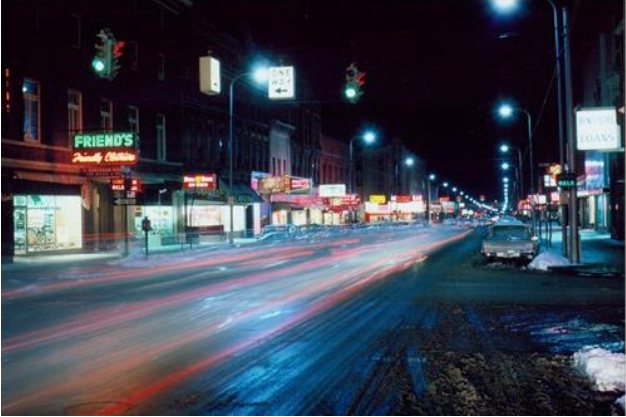
Downtown Muskegon on Western Avenue, 1964. Businesses and lending institutions including Beneficial Financial, the white sign at right, faced pressure from community activists calling for fair hiring and housing practices during the Civil Rights Movement. Lakeshore Museum “Beneficial Financial.” Accessed September 21, 2025. https://5091.sydneyplus.com/final/Portal/Default.aspx?component=AAAS&record=104bce6b-d8bb-4f8b-841e-823315f3c1de