Ottawa County Dust Bowl - Overview
By the 1880s, Ottawa County’s once-abundant forests of white pine, cedar, and hardwoods had been cleared, much of the lumber aiding in Chicago’s post-1871 fire reconstruction.
Within a decade, the land was transformed into productive farmland, and by 1910, Ottawa County had become one of Michigan’s leading agricultural regions.
The area thrived on corn, grains, and especially fruit orchards along the lakeshore, with produce shipped from Grand Haven to markets in Milwaukee and Chicago.
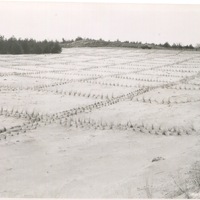
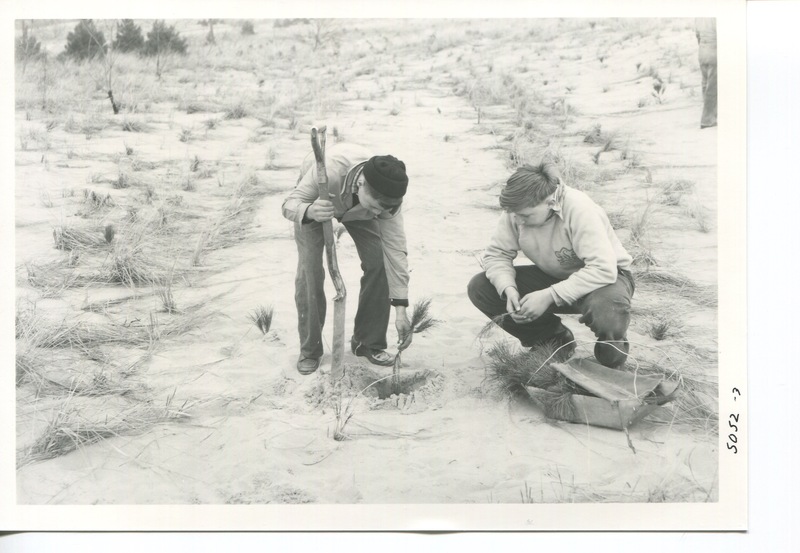
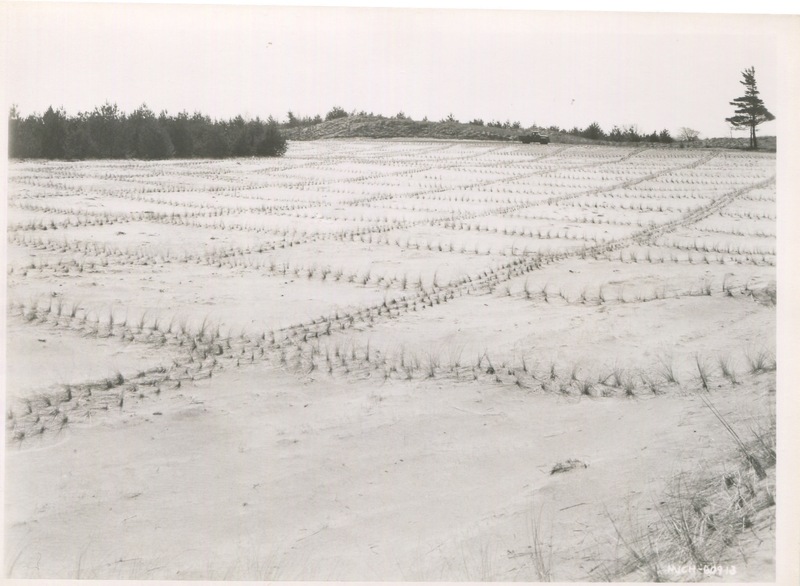
Sandblow stabilization with skeleton beach grass, March 1953
Efforts to protect farmland from drifting sand began as early as the 1880s, with major reforestation initiatives taking place during World War I.
However, the increasing drought after 1935 devastated farms along Lake Michigan, creating a localized dust bowl that left tens of thousands of acres barren.
- Title
- Sandblow Stabilization, Skeleton Beach Grass, March 17. 1953
- Item sets
- Muskegon 99D Local History